



Rising temperatures and higher gas prices sometimes prompt drivers seeking to maximize mileage and minimize fuel costs to ask: Does the AC use gas in my car?
Yes, your vehicle’s air conditioner consumes fuel, although it’s an indirect use. Keep reading to learn more about how — and how much — gas the AC in your car uses.
How Does the Car Air Conditioner Work?
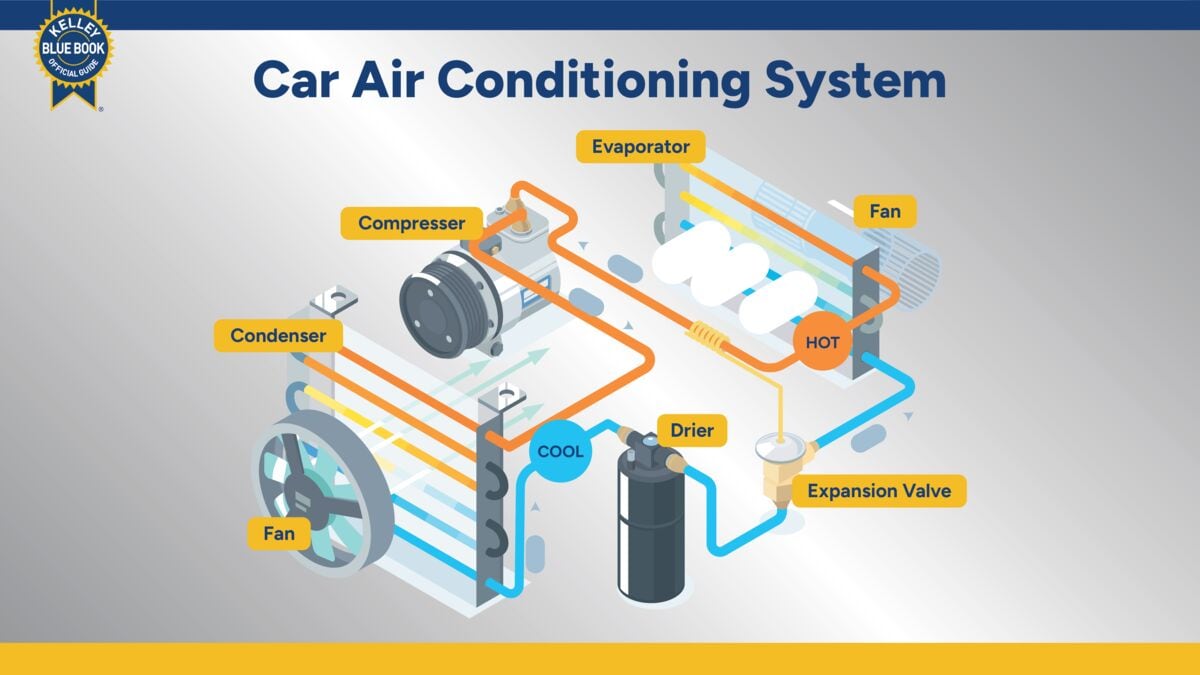
A general overview of how a typical car air conditioner works can help you understand its negligible impact on fuel consumption. The car’s AC uses energy from the engine to cool the cabin temperature. Here’s how it works:
- Compressor: The heart of the air conditioning system is the compressor. It compresses the refrigerant gas, raising its temperature. The compressor is the component that indirectly uses power generated from the vehicle’s fuel.
- Condenser: The hot refrigerant gas flows through the condenser (a series of coils), releasing heat. The cooled gas condenses into a cold liquid.
- Receiver-drier: Refrigerant passes through a reservoir that removes water from the line, which, if not removed, can create ice crystals and damage the AC system.
- Expansion valve: A valve restricts the refrigerant flow, causing it to expand and change from high-pressure to low-pressure refrigerant.
- Evaporator: The liquid refrigerant passes through the evaporator, absorbing heat from the cabin air and cooling it down.
- Blower fan: The blower fan circulates the cold air outside the evaporator into the cabin.
RELATED: Car AC Not Blowing Cold Air: Possible Causes and Solutions
Does Car AC Use Gas?
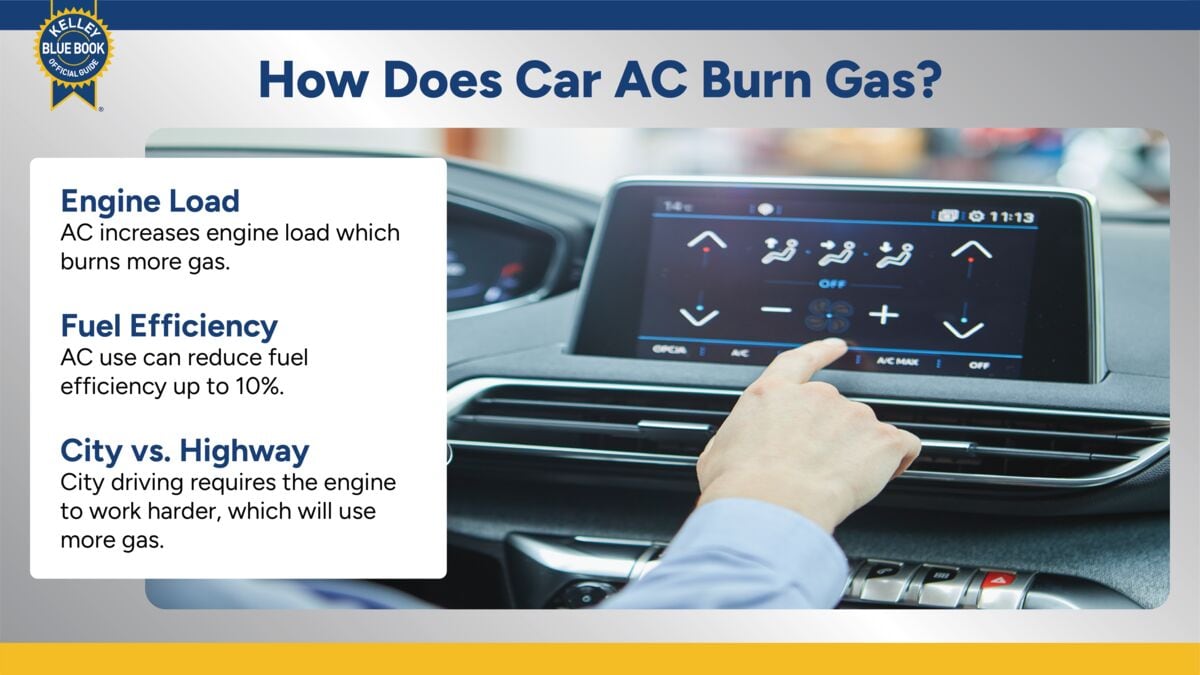
Yes, the car air conditioner does use gas, but not directly, and not that much. The vehicle’s engine uses gas to power the alternator; the alternator provides energy for the compressor in the AC system. The impact on fuel economy varies depending on factors like outside temperature, driving speed, and the car’s make and model.
Tips for Balancing Comfort and Fuel Efficiency Using AC
- Use AC wisely: Turn it off when it’s unnecessary. If the weather is pleasant, consider opening the windows instead.
- Pre-cool the car: Park in the shade or use a sunshade to keep the interior cooler. When you start the vehicle, roll down the windows and let the hot air escape before turning on the air conditioner.
- Service regularly: A well-maintained air-conditioning system is more efficient. Check the refrigerant levels, clean the filters, and ensure the system is leak-free.
Yes, the car air conditioner indirectly uses gas by putting an additional load on the engine. Staying cool is essential, but so is saving on fuel costs. Your and your passengers’ comfort, and the safety issue of driver fatigue from excessive heat, are considerations when deciding to use the AC. With smart usage and regular maintenance, you can balance comfort and fuel efficiency.