

Quick Facts About the Buying and Selling Marketplace
- The final sale price of the average new car is perilously close to the $50,000 mark.
- Used car prices dropped slightly last month.
- The credit market remains good for borrowers, with lower rates likely ahead.
The price of the average new car is nearing the $50,000 mark. It briefly surpassed $50,000 in September, largely due to a rush to buy expensive electric vehicles (EVs) before a $7,500 federal tax credit disappeared. However, in November, it nearly hit that level without the EV sales rush. It will likely permanently crest the mark sometime early in 2026.
Believe it or not, there is some good news for car shoppers. Wage growth in November helped cancel out some of the effects of high prices. The winter holidays often bring heavier discounts to the sales lot. But late 2025 remains a challenging time for shoppers needing a new car.
Tariffs, trade wars, a government shutdown limiting economic data, and threatened parts shortages have meant loud headlines and growing uncertainty. Automakers have increasingly canceled affordable cars, focusing their efforts on attracting wealthier buyers.
And your fellow shoppers are making pricier choices — cars priced over $75,000 outsold cars priced under $30,000 in November.
But don’t panic. It’s still possible to find a good deal on a new car this month, and many things are moving in your favor if you need new transportation.
We’ll explain what to expect when buying a new or used car, or selling or trading one in, and why it might make sense to act quickly.
What New Car Shoppers Can Expect
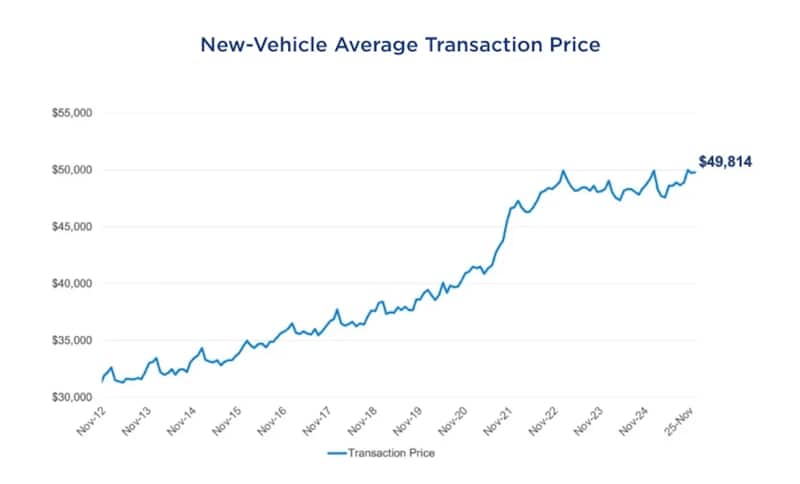
The average new car buyer paid $49,814 in November, 1.3% higher than a year ago. If current trends hold, that figure will likely permanently cross the $50,000 line in January.
That’s partly due to prices increasing as cars for the new 2026 model year reach sales lots, and as manufacturers increasingly pass the cost of tariffs on to the car shopper. The average November sale included discounts worth just 6.7% of the purchase price, down from 7.9% the previous year.
The decisions shoppers continue to make also contribute to higher average prices. Luxury cars tend to sell well around the holidays, and as November ended, cars with sticker prices over $75,000 were outselling those priced under $30,000.
That high average price “reflects what consumers choose to buy, not what’s available,” notes Cox Automotive Executive Analyst Erin Keating. “Many new-car buyers today are in their peak earning years and are less price-sensitive, opting for vehicles at the higher end of the market to get the features and experiences they value most.” Cox Automotive is the parent company of Kelley Blue Book.
The average full-size truck, for instance, sold for $70,178 in November, even though every full-size truck on the market starts at a much lower price.
RELATED: When Will New Car Prices Drop?
So much of that cost is in your control as a shopper. You can keep prices reasonable by choosing only as much car as you really need, and by paying attention to supply at the brands you’re considering.
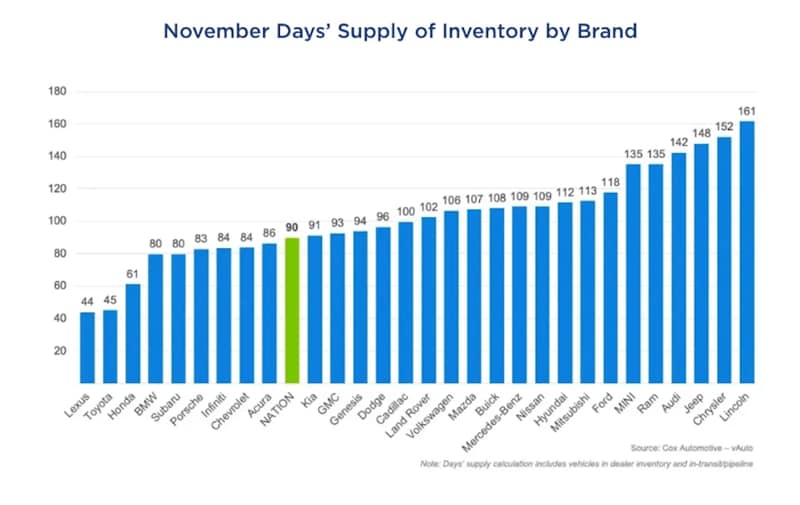
Dealers typically aim to maintain a 60-day supply of new cars on sales lots, with an additional 15 days on order. This month, some are well below that target and unlikely to offer heavy discounts. Others have a surplus and are looking to make deals. Shopping outside your preferred brands could save you thousands.
Each Automaker Is Responding Differently
Car pricing is complicated, and each automaker has responded to tariffs differently. As long as the tariffs remain, the response will likely shift constantly.
Some, like Hyundai and Mercedes-Benz, pledged not to raise prices at first, though increases are trickling in with the model-year change. Others are deciding on a case-by-case basis.
RELATED: How Each Automaker Is Responding to Tariffs
Automakers have absorbed some of the cost of tariffs for a while. They might even respond by raising the price of one car to help pay the tariff on another.
With so much constantly shifting, your best tool for understanding local price changes is the Kelley Blue Book Fair Purchase Price, which we calculate using recent transactions for that car in your area. We update each Fair Purchase Price weekly, showing you how tariffs and tariff anxiety are impacting the prices of the specific vehicles you’re shopping for where you live.
Loan Conditions Are Improving
Prices are all that cash buyers need to worry about. However, few car shoppers are cash buyers. Most Americans borrow money to buy a new car.
We have good news for most Americans: Loan conditions are currently the best they’ve been all year.
Lenders approved 73.6% of applications in November, 1.6% better than October and 1% higher than a year ago.
The average interest rate fell to 10.5%, down from 11% the previous month. Lenders asked for an average down payment of 13.4%.
The Federal Reserve, commonly called “the Fed,” has also played a role. The Fed sets the federal funds rate, the interest rate banks use when they lend each other money. The federal funds rate determines interest rates for every type of loan, including car loans. It’s still on the way down, which should ripple through the economy over the next few months.
The Fed has now cut rates at its last three consecutive meetings. Rate cuts typically take a few months to reach shoppers, so the best rates may still come in early 2026.
What Used Car Shoppers Can Expect
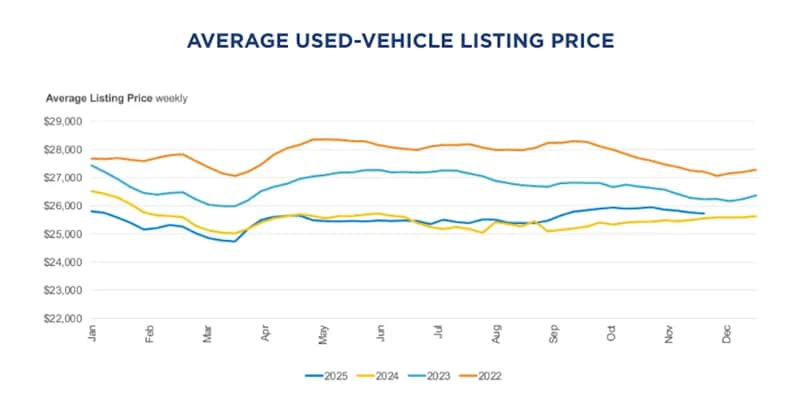
Used car prices improved modestly in November. The average buyer paid $25,730 — down $217 from the month before.
Supply and demand govern used car prices, and supply has proven steady. Dealers ended November with about as many used cars as they had when it started. The prices dealers pay at auction rose modestly in recent weeks, which can be a sign of small price increases ahead. But the inflation has remained small and predictable.
That’s great news for shoppers, because the nationwide supply of used cars has been thin for years. Pandemic-era disruptions meant automakers built about 8 million fewer cars than they normally would have in 2021 and 2022. Millions of cars will never reach the used market, keeping supplies low for a long time.
Older, Less Expensive Cars Harder to Find
If you hope to find an older vehicle and your budget is less than $15,000, these cars remain in short supply. Dealers have just 36 days’ worth of used cars priced under $15,000 — 14 days below the overall industry average.
However, the tariff threat could push used car prices higher. When new car prices rise, would-be new car shoppers head to used lots looking for something still in their price range. More would-be new car shoppers start buying up the available used vehicles, drawing down the inventory. Plus, Americans are holding onto their cars longer than ever. The average vehicle on American roads is 12.8 years old. Automakers also produced fewer cars for several years after the 2008 recession, leaving fewer higher-mileage, older used vehicles available to sell.
The most accessible used cars carry prices between $15,000 and $30,000.
Automakers Build More Expensive Cars
If you haven’t been car shopping in a while, the cars on offer may surprise you.
In recent years, inexpensive cars have grown scarce. Recent analysis finds that sales of vehicles priced at $25,000 or less have fallen by 78% in just five years. Six years ago, automakers offered 36 new models in that price range. By late 2023, that number was just 10. Automakers have announced plans to cancel most of those 10, including the low-cost Mitsubishi Mirage that was axed after 2024.
Meanwhile, cars priced at $60,000 or higher have grown by 163% during the same period.
Dealers are pushing back, telling automakers they need more mainstream cars to sell, but correcting the problem will take time.
How to Buy a Car Right Now

New car prices remain nearly $12,000 higher than five years ago, amid the COVID-19 pandemic. That’s when the average transaction price for new vehicles was around $38,563. However, with all the technological advances and offerings, your next car will likely last longer and help you drive safer than ever.
RELATED: Buying Older, Used Cars in 2025
Vehicle quality studies repeatedly show that today’s new cars suffer fewer problems than those from just a few years earlier. Buyers of higher-priced used cars will likely see the vehicle driving on the road even longer. The same goes for those buying new ones.
With most automakers now building such durable cars, they compete by adding more high-tech features. Features like adaptive cruise control and Apple CarPlay are now more common than ever on entry-level vehicles. Read on to see our tips on buying a car below.
How to Leverage Incentives to Buy a New Car
Last month, car incentives comprised about 7.2% of the average deal, or about $3,534. To learn how to take advantage of incentives, read about our monthly best car deals to find dealer or manufacturer offers, including cash back and lower interest rates for financing your next vehicle.
RELATED: How to Buy a New Car in 10 Steps
Selling a Car Right Now
Few of us can sell a car without needing to buy a replacement. If you can sell now, what are you waiting for? You could get more for your vehicle if it’s in high demand, and that’s excellent news. The best way to get the most money for your used car is to sell it privately. But if you don’t want the hassle, there is still an opportunity to sell to a dealership.
PRO TIP: If selling a car, consider selling it peer-to-peer using Kelley Blue Book’s Private Seller Exchange marketplace. It’s a low-cost method that helps consumers earn more for their vehicles than selling to a dealership.
Trading in a Car Now
The ongoing shortage of used cars will be with us for years. As a result, you’ll likely still see respectable offers for your used car this month.
Searching for a decent price for your trade-in is still a good idea by shopping around. Each dealership tries to keep a balance of vehicles on its lot. Sometimes, the one you want to buy from doesn’t need your trade-in desperately, but a competitor does.
Research your vehicle’s Kelley Blue Book value, then call several local dealerships to see what they’ll offer you for it. Or try our Instant Cash Offer tool, which brings the deal to you from various dealerships without obligation. You can choose your preferred offer or use it to negotiate with others.
Is Trading in Your Vehicle a Good Idea?
Possibly. You could get more money than usual if your vehicle is in high demand. It will help defray the costs of buying a new or used car. However, if your vehicle is not in high demand, you can expect to get close to the Kelley Blue Book value. Use Kelley Blue Book’s car valuation tool to find out the price of your new or used car.
Can You Trade in a Vehicle That’s Not Paid Off?
Yes. Whether you have paid off your car or not, you can still trade it in. However, a car depreciates when you drive it out of the dealership. It’s best to take stock of how much equity you carry in the vehicle. Take the difference between the car’s current market value and what you owe to figure that out. Read our story on selling a car.
Looking Ahead
New car prices are likely to cross the $50,000 line early in 2026, and stay above it indefinitely. Automakers will eventually have to address the yawning gap at the low-cost end of the car market. But they’re being conservative with their business decisions now, with few willing to take the risk of designing cheaper cars when the expensive ones are selling so well.
Used car prices, barring any unusual disruptions to the market, should increase only subtly.
If you need a new car soon, it might make sense to act now while prices remain steady.
RELATED: 10 Best Used Car Deals
Tips for Buying a Vehicle Right Now

If you shop right now, we recommend a few strategies to help you find the right new or used car that fits your budget.
- Expand your search. Widen your search to a broader geographic area because you could find a better deal or the used car you want outside your immediate area.
- Stay patient. Call dealerships to see what’s in stock for those high-demand vehicles. Leave a refundable deposit if you want first dibs.
- Buy a less expensive model. With higher car loan interest rates, consider buying a cheaper vehicle model instead of a more expensive one in the lineup you’re considering. Understand how much you can afford.
- Look for deals. Make sure to research car deals to find what works best for you. It may involve contacting or visiting several dealerships as you search for the right fit.
- Weigh your options. Don’t just look for a car; search for the best interest rates from banks or credit unions. Also, shop for your insurance rates ahead of the deal to know how much the higher auto insurance costs will be for your desired vehicle. Then, weigh all your options, including financing incentives and deals at the dealership, if that’s where you buy your next vehicle. Also, you may find that the prices of some newer-model used vehicles are almost the same as new cars. Just keep all your options open during your search.
- Avoid dealer markups. If you see a markup (sometimes called a “market adjustment”) on your final invoice, ask the dealer to remove it. If they refuse, shop at another dealership. Markups were more prevalent during the COVID-19 pandemic. However, dealers still mark up some vehicles that are in short supply.
- Question all add-ons. If your sales summary includes entries like “window tint,” “fabric protection,” “carpeted floor mats,” and other add-ons you didn’t request, ask the dealer to remove those line items from your invoice. Many dealers tack on these extras to make quick profits.
It may make more sense to keep your existing car for another year or two. If you must buy, be prepared to take excellent care of your next car to keep it running for a long time.
Editor’s Note: We have updated this article since its initial publication.