


AUSTRALIA’S end-of-financial-year sales battle has escalated into one of the most aggressive discounting and incentivising new car sales campaigns seen in recent memory.
Most manufacturers are deploying combinations of cash incentives, driveaway pricing, subsidised finance, fuel cards, free servicing, and charging solutions in a bid to sway buyers and move metal before 30 June.
Although consumer confidence remains fragile with, among other things interest rates still elevated and showroom competition at an all-time high, many brands are increasingly abandoning traditional discounting strategies in favour of tailored offers designed to appeal to specific buyer groups.
In the red-hot BEV market for example, buyers are being lured with free home chargers and heavily subsidised finance, hybrid shoppers are being tempted with cashback and driveaway pricing, while ute customers are being targeted with fuel cards, servicing packages, and sharp reductions on slow-moving stock.
The extensive number of offers currently available highlights the intensity of competition in Australia’s crowded new vehicle market, where more than 70 brands are fighting for market share.
Among the most aggressive campaigns is Hyundai’s sweeping EOFY offensive, which spans almost its entire model range as it pushes back against competitors for market share.
The South Korean manufacturer has repositioned its Kona Electric and Ioniq 5 line-ups with price reductions of up to $8000, while separate driveaway offers on EV stock slash as much as $14,500 from selected Kona Electric variants.
Hyundai’s broader EOFY campaign also covers the i30, Kona (petrol), Tucson, Santa Fe Hybrid, and Staria ranges.
Volvo has similarly sharpened its electric vehicle proposition, reducing EX30 pricing by up to $11,300 ahead of the arrival of the EX60. Additional driveaway pricing and subsidised finance rates are also being used to stimulate demand.
Chinese brands continue to lead the charge when it comes to aggressive incentive programs.
Geely has launched a 0.88 per cent comparison rate offer on its EX5 Extended Range EV and Starray EM-i hybrid SUV, while bundling a complimentary home charging unit with EV purchases.
Omoda Jaecoo is offering up to $5000 cashback across its range, including the J7 and J8 SUVs, while JAC has opted for a more practical approach, providing buyers of its T9 ute with a $4000 fuel voucher.
GWM has taken a multi-pronged approach, combining driveaway discounts, low-rate finance offers, and free charging hardware across its Haval, Tank, Cannon, and Ora line-ups.
The strategy reflects a broader shift in the way manufacturers are competing for buyers.
Where once EOFY campaigns focused largely on discounting, brands are now packaging ownership benefits into their offers.
Free servicing, roadside assistance, charging infrastructure, fuel cards, and finance incentives are increasingly being used to differentiate products in highly contested segments.
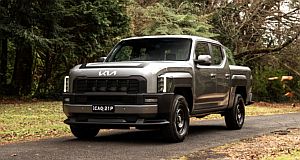
The still-dominant ute market exemplifies how keen manufacturers are to make a sale in particular Kia which has dramatically reduced pricing on 2025-built Tasman dual-cab variants, cutting up to $14,000 from driveaway prices in a bid to accelerate sales of its first one-tonne ute.
The flagship Tasman X-Pro now starts from $64,990 driveaway, positioning it directly against volume-selling rivals from Ford, Toyota, and Isuzu.
Toyota, traditionally reluctant to discount, has entered the fray with a rare EOFY campaign for the Tundra. Buyers of selected stock built prior to July 2025 receive complimentary on-road costs and a $10,000 cash bonus, equating to savings of approximately $20,000.
Ford is offering fuel card incentives worth up to $5000 across selected Ranger and Everest variants, while Mitsubishi has rolled out fuel card bonuses and free servicing packages across Triton and Outlander models.
And it seems even premium brands are feeling the pressure…
BMW is effectively paying the GST on selected SUV models, Audi is covering Luxury Car Tax liabilities on nominated vehicles, while Mercedes-Benz is offering discounted finance and drive-away pricing across multiple model lines.
Industry observers say the scale of incentives reflects a market characterised by increasing supply, growing inventory levels and softer retail demand.
While overall new vehicle sales remain historically strong, the arrival of new brands, rapid growth of Chinese manufacturers and changing consumer preferences have intensified pressure on established players.
Electric vehicles have emerged as a particular battleground.
With dozens of new EV models arriving in Australia over the past 24 months, brands are increasingly using pricing and finance incentives to maintain competitiveness.
Home charging equipment, discounted novated lease programs, and ultra-low finance rates have become common tools in the fight for market share.
The result is reputedly a buyers’ market unlike anything seen in recent years.
For consumers, the current EOFY period presents one of the strongest opportunities to secure substantial savings across a broad range of vehicle types, from affordable city cars and family SUVs through to premium EVs and heavy-duty pick-ups.
Whether the discounts continue beyond 30 June remains to be seen.
But with manufacturers under pressure to hit volume targets and clear stock ahead of the new financial year, industry analysts expect the EOFY sales war to remain fiercely contested right up to the closing bell.