

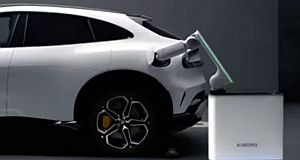

BEIJING based car maker Xiaomi Auto has taken EV charging solutions to a futuristic next level, previewing a robotic arm that can plug itself into a vehicle’s charging port and initiate charging automatically.
Without input from the vehicle owner, the robotic arm – extending from a 152mm-wide case – uses AI technology to accurately insert a charger into the vehicle’s port and can unplug itself once the battery reaches full charge or a set level.
Charging can also be initiated by the owner remotely via a smartphone app.
However, this isn’t a novelty concept that will never see the production light of day as it’s slated for rollout in its home market in the fourth quarter of this year.
This isn’t the first time a robotic charging arm has been tried by an electric vehicle company.
Back in 2015, Tesla previewed a prototype of a similar device, but while it has invested heavily in robotics technology – going as far to repurpose its ex-Model S and Model X factory in California to manufacture the humanoid Optimus robot – the charging arm never made it to full production.
Xiaomi also isn’t the Chinese automotive player to preview such technology, with Li Auto, Zeekr, and the Harmony Intelligent Mobility Alliance among those to showcase their own robotic charging arms.
Another method of electric vehicle charging that is slowly becoming more mainstream is wireless vehicle charging.
In 2018, BMW became the first manufacturer to offer a wireless vehicle charger from the factory for its 530e iPerformance plug-in hybrid.
The technology has slowly started becoming more widespread.
For instance, in September of last year Porsche announced the release of a one-box plate – meaning it does not require a wallbox or control unit – 11kW inductive charger alongside the Cayenne Electric SUV.
Up until this point, Xiaomi has exclusively sold its vehicles in China but has still made international automotive headlines in recent times, particularly with its high-profile Nürburgring lap record attempts.
Those attempts saw the SU7 sedan and YU7 GT SUV claim the production EV sedan and the production SUV lap records respectively around the world-famous racetrack (until the former’s record was taken by the Manthey-kitted Porsche Taycan Turbo GT).
In its home market, Xiaomi’s products have launched to overwhelming receptions.
When the YU7 – its Tesla Model Y competitor – was launched in China last year, Xiaomi secured over 240,000 orders within 18 hours.
While official plans to bring its vehicles to Australia are yet to be confirmed by the Chinese brand, it has announced plans to launch in Europe during 2027.