

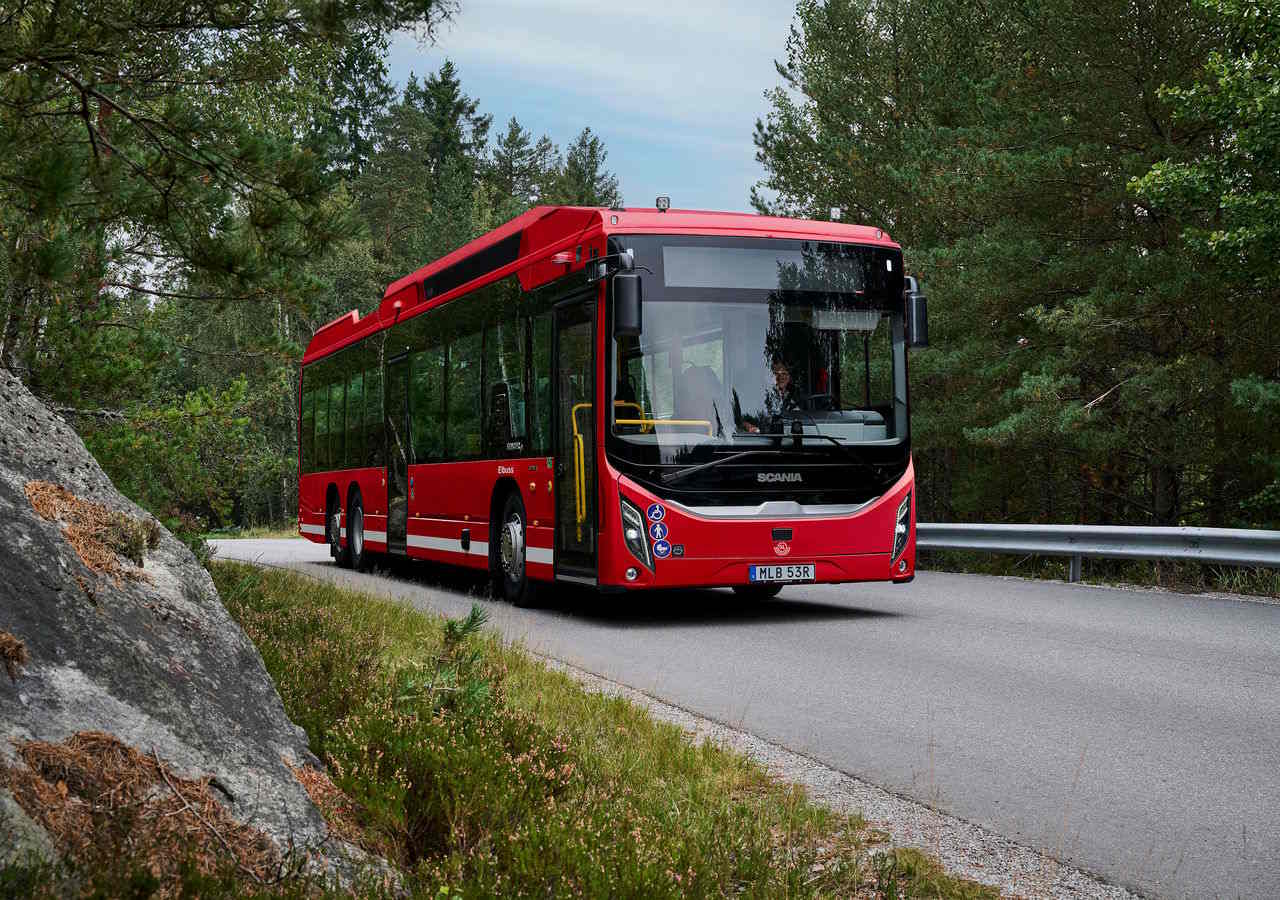
Swedish commercial vehicle manufacturer Scania says it will supply 91 battery electric buses to a local transport operator, in its largest order to date and one of the largest electric bus deals in the country.
Scania will supply 91 of its Fencer F1 battery electric vehicle (BEV) buses to VR Sweden, including 32 in a 4×2 configuration and 59 in a 6×2*4 configuration.
VR Sweden won the contract to provide bus services in Södertälje and Nykvarn from local public transport authority SL in 2025 and will begin operations next year. The purchase of these 91 electric buses is intended to fulfil this contract.
“The investment is an important step in the transition to electrified public transport and enables reduced local emissions, while ensuring attractive and reliable traffic for passengers as well as a good working environment for drivers and maintenance personnel,” said Anders Frykman, bus director at VR Sweden.
Each bus will feature battery capacity of 445 kilowatt-hours (kWh), with 400 kWh of usable energy and a charging time from 5 to 95 per cent of only 73 minutes.
The technical specifications provided by Scania do not state an estimated driving range, but the 73 minutes charging time is based on adding 485 kilometres per hour of charge.
The agreement signed between Scania and VR Sweden includes not only supply but also vehicle service and long-term support. Scania also already boasts production facilities and headquarters in Södertälje.
“With development and battery assembly in Södertälje, and close cooperation throughout the process, we will offer a solution that is both robust and sustainable,” said Christopher Svensson, key account manager at Scania Sweden.
Sign up for The Driven’s free daily newsletter and get the latest EV news and analysis delivered straight to your inbox.

Joshua S. Hill is a Melbourne-based journalist who has been writing about climate change, clean technology, and electric vehicles for over 15 years. He has been reporting on electric vehicles and clean technologies for Renew Economy and The Driven since 2012. His preferred mode of transport is his feet.