

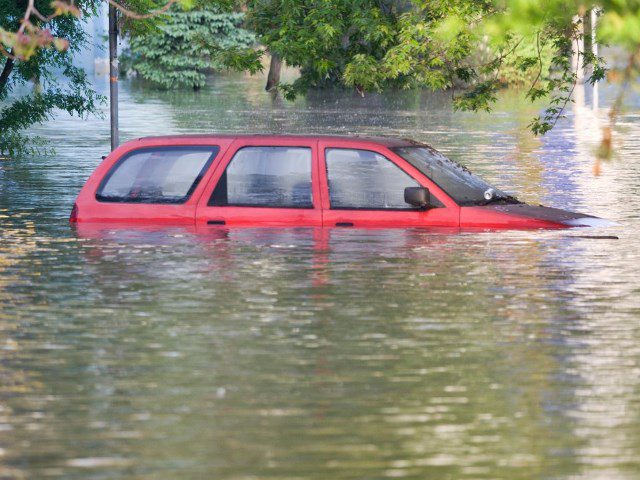
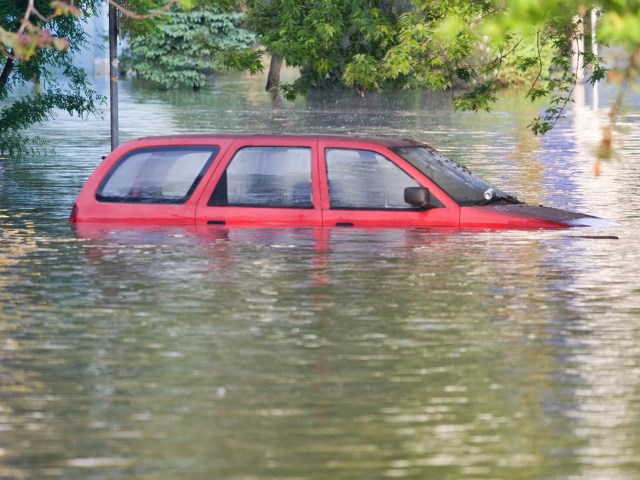
Finding your car submerged or partially underwater after a flood is incredibly stressful. The damage floodwaters can cause to a vehicle’s mechanical systems, electronics, and interior can be extensive. However, prompt and appropriate action can reduce the impact of flood damage to your car. Keep reading for a guide to the steps to take when your car is flooded.
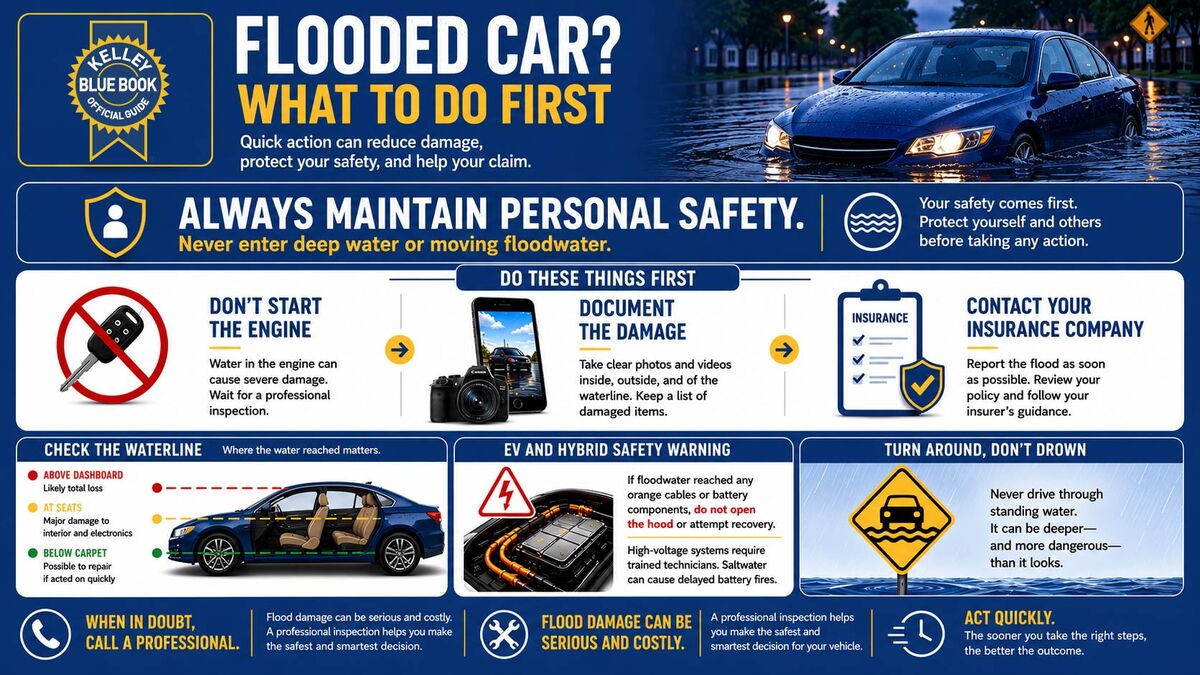
- Maintain physical safety. Your health and safety are more important than your automobile. Do not wade into standing water deeper than your knees to reach the car. A swiftly moving, ankle-deep current can sweep you off your feet. Avoid putting yourself at risk, and wait until it is safe to reach the vehicle.
- Prevent additional damage. Do not try to start the car until a qualified mechanic has looked at it. If water has entered the cylinders, attempting to start the engine can cause significant damage. Lift the hood and disconnect the 12-volt battery while wearing dry gloves to prevent electrical shorts and further damage to the car’s complex electrical system. Safety Note: The high-voltage systems in hybrid and electric vehicles (EVs) require trained technicians for safe recovery. Owners should not open the hood if any orange cables or battery packs were submerged in floodwater. Submersion in salt water may trigger delayed battery fires.
- Assess the damage. Look for watermarks on the car’s exterior and interior to gauge the extent of the flood damage. Inspect the trunk, taillights, and headlights, and check the engine bay when disconnecting the battery. In many cases, waterlines on the dashboard of modern cars signal a strong possibility of a total loss, due to the concentration of sensitive electronic components. Tip: If your car is still surrounded by floodwater, do not open the doors or windows. Let the water recede first, then document the waterline and contact your insurer before beginning cleanup.
- Document everything. Get detailed photos or videos of the car and the waterline. Take images from various angles to capture evidence to support your insurance claim. Use timestamped smartphone photos to help ensure documentation requirements are met. Make a comprehensive list of all items affected by floodwaters.
- Contact your insurance company. Do not delay contacting your insurance agent. Review your policy to understand your insurance coverage. Some policies exclude flood damage. Keep copies of all communications, records, and documents related to the insurance claim. Arrange for a professional assessment of the flooded car.
- Start the recovery process. Use a wet/dry vacuum to remove standing water from the car’s seats and floorboards. If the weather has improved, open the doors and windows to promote air circulation and help the car dry out.
- Professional assessment. Follow guidance from your insurance company. In some cases, insurers will total the car after determining that the cost of mechanical and electrical repairs, cleaning, and odor management exceeds the vehicle’s value.
- A professional mechanic must inspect the car before starting the engine. Their recommendations may include replacing the oil and other fluids and testing the electrical system for corrosion and short circuits. To ensure it is safe to drive, the mechanic should also check the functionality of electrical components, including the lights, windows, seats, infotainment system, and advanced safety and driver assist features.
- A professional cleaning service can be invaluable for an in-depth cleanup, helping prevent long-term damage. A thorough cleaning will help ensure all parts are cleaned and dried to prevent mold growth and corrosion, neutralize odors, and address lingering smells.
- Take preventive measures. Regular checks and maintenance of your car’s seals and gaskets can help ensure they remain watertight. Consider adding comprehensive insurance coverage if you live in a flood-prone area. If forecasters and local officials anticipate flooding from a hurricane or other weather event, move your vehicles to higher ground, place them on lifts, or park them in a multilevel parking garage. For your safety, always drive with caution in heavy rain. Never drive through standing water, following the clear federal guidance of “Turn around, don’t drown.”
Bottom Line on Your Flooded Car
Working through the aftermath of a flooded car and the related questions can be daunting, but with patience, you can manage the situation. Acting quickly will help minimize damage, improve the likelihood of salvaging your vehicle, smooth the insurance claim process, and make shopping for a new car, if necessary.
Editor’s Note: We have updated this article since its initial publication.